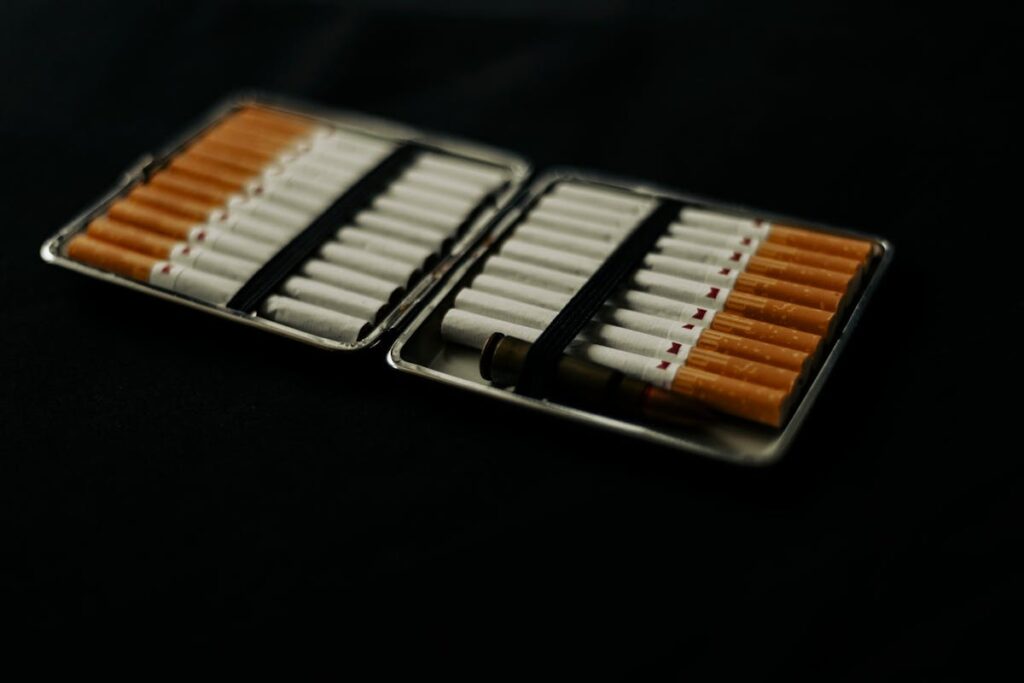
The smoke-free nicotine market has never been more crowded. Walk into any vape shop in Ireland today and you will find two distinct product categories competing for the attention of people who want to quit cigarettes: e-cigarettes and nicotine pouches. Both promise a cleaner experience than combustible tobacco, yet they work through completely different mechanisms, deliver nicotine in very different ways, and suit very different lifestyles. Understanding the science and practicalities behind each option is the key to making an informed choice.
What Are Nicotine Pouches?
Nicotine pouches are small, white, tobacco-leaf-free sachets that sit between the upper lip and gum. They contain pharmaceutical-grade nicotine, plant-based filler, flavourings and pH adjusters. There is no smoke, no vapour, no combustion and no need for any device. The nicotine passes directly through the oral mucosa – the thin tissue lining the mouth – and enters the bloodstream within minutes. Brands such as ZYN, ON!, VELO and Nordic Spirit have made pouches widely available in convenience stores and petrol stations across Ireland and the UK, capitalising on their discreet profile and ease of use.
Nicotine pouches come in a range of nicotine concentrations, typically from 4 mg to 16 mg per pouch, and in an enormous variety of flavours including mint, citrus, coffee and berry. A single pouch lasts between 20 and 60 minutes depending on the brand and individual saliva production. Once used, the pouch is simply disposed of in a small compartment built into the lid of the can.
How Vaping Works: A Quick Technical Recap
An e-cigarette, or vape, is an electronic device that heats a liquid – known as e-liquid or vape juice – to a temperature between roughly 150 °C and 250 °C. This vaporises the liquid without burning it, producing an inhalable aerosol. The e-liquid itself contains propylene glycol (PG), vegetable glycerin (VG), flavour concentrates, and optionally nicotine in either freebase or salt form. Modern pod systems and disposable vapes use nicotine salts, which are smoother at higher concentrations and deliver nicotine to the bloodstream faster than traditional freebase formulas.
The key distinction is the route of delivery: vaping deposits nicotine through the lungs, whereas pouches deliver it through the gum. Pulmonary absorption is generally faster and more efficient than oral mucosal absorption, which is why many former heavy smokers find vaping more immediately satisfying as a cigarette replacement in the early stages of quitting.
Nicotine Delivery: Speed, Peak and Duration
Research published in the journal Nicotine and Tobacco Research has compared the pharmacokinetics of various nicotine-delivery products. Combustible cigarettes remain the fastest delivery mechanism, raising blood-nicotine levels sharply within seven to ten minutes of the first puff. Vaping with a nicotine-salt product is the next fastest, typically reaching peak plasma nicotine in around ten to fifteen minutes. Nicotine pouches are slower – peak concentrations are usually achieved between twenty and forty minutes – but the nicotine release is more sustained, which some users find reduces the urge to use the product again immediately.
For someone transitioning from cigarettes, the sharper spike offered by vaping can be more effective at managing acute cravings in the first weeks. For someone seeking long-term maintenance – or for a situation where discretion matters most – the steady drip of a nicotine pouch may be preferable.
Health Considerations: What the Evidence Says
Neither product is risk-free, and it is important to be clear about that. However, both have significantly reduced risk profiles compared to smoking. Public Health England (now the UK Health Security Agency) concluded in its landmark 2015 review that vaping is approximately 95% less harmful than smoking – a figure that has held up broadly in subsequent analyses, though researchers continue to study the long-term effects of chronic vaping on lung tissue, immune response and cardiovascular function.
Nicotine pouches carry their own specific concerns. The high pH of many pouches accelerates nicotine absorption but also increases the risk of gum irritation, recession and oral mucosal lesions with prolonged use. The World Health Organisation has flagged the need for more independent research into the long-term oral health effects of pouches, particularly at the higher nicotine concentrations now available.
Key insight: Both products eliminate the products of combustion – tar, carbon monoxide, and thousands of toxic pyrolysis chemicals – which are responsible for the vast majority of smoking-related disease. For most smokers, switching completely to either represents a major harm reduction step.
Lifestyle Fit: When to Choose Which
Pouches win on discretion. They can be used on aeroplanes, in offices, at restaurant tables and in any environment where vaping is prohibited. There is no cloud of vapour, no smell on clothing or breath (beyond the pouch’s own flavour), and no device to charge or maintain. For professionals in client-facing roles, parents in mixed social settings, or anyone who travels frequently, this is a decisive advantage.
Vaping has the edge on ritual satisfaction. The act of inhaling and exhaling mimics the physical gesture of smoking more closely than any other alternative, which psychologists note is an underappreciated part of nicotine dependence. The ‘throat hit’ – the slight scratch at the back of the throat produced by PG-rich liquids – is absent in pouches entirely. For heavy smokers with a strong habitual component to their addiction, this sensory dimension can make a significant difference to success rates.
Regulation and Availability in Ireland
In the Republic of Ireland, both products are now regulated under the Public Health (Tobacco and Nicotine Inhaling Products) Act. The Nicotine Inhaling Products (Age of Sale and Labelling) Act 2023 extended the existing age-of-sale restrictions to cover vaping products. Nicotine pouches, interestingly, remain in a somewhat grey regulatory area in some EU jurisdictions, though Irish retailers increasingly apply the same 18+ standard voluntarily.
TPD (Tobacco Products Directive) compliance limits e-liquid tanks to 2 ml and nicotine-containing e-liquid bottles to 10 ml in Ireland and the wider EU, with a maximum concentration of 20 mg/ml. There are currently no equivalent EU-wide concentration caps on nicotine pouches, which is why some brands offer 16+ mg pouches that would exceed the equivalent TPD limit in vape form.
Making the Decision
The best smoke-free alternative is the one you will actually use consistently. For former light-to-moderate smokers, or for those primarily looking for a discreet on-the-go option, nicotine pouches offer a compelling, device-free solution. For heavier smokers, those who rely on the physical ritual of smoking, or those who need faster craving relief, vaping typically delivers better outcomes in the critical first months of quitting. Many people use both – a vape at home and pouches at work – treating them as complementary tools rather than rivals. Whatever the choice, the evidence is unambiguous: either product, used in place of cigarettes, is a significant step towards better health.