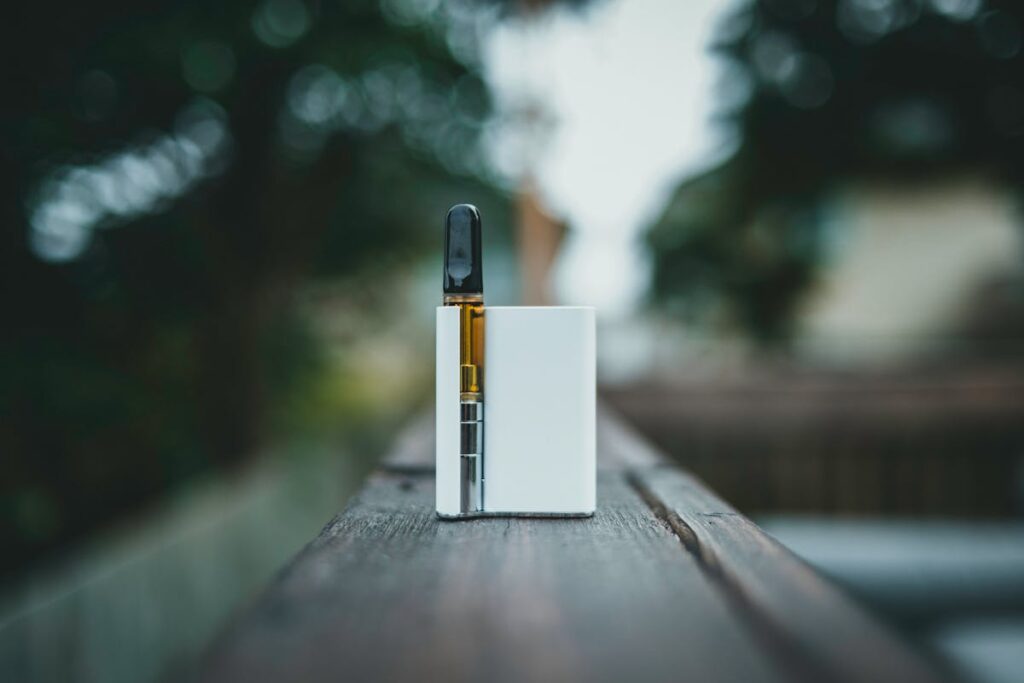
Few topics generate more confusion at airport security and customs than duty-free tobacco allowances. Every year, Irish travellers are stopped at Dublin, Cork and Shannon airports carrying quantities of cigarettes, tobacco and increasingly vaping products that exceed what the law permits. Understanding exactly what you can and cannot bring back – and the difference between duty-free shopping and bringing goods from outside the EU – can save you from a confiscation, a fine, or worse.
The Legal Framework: EU vs. Non-EU Travel
The rules that apply to tobacco allowances depend entirely on where you are travelling from – not where you bought the products. This distinction is frequently misunderstood. Travelling within the EU (for example, returning from Spain or France) does not entitle you to any duty-free allowance, because goods circulate freely within the single market. What you can bring back from EU countries is unlimited in quantity, provided the goods are for personal use and you have paid tax on them in the country of purchase. However, Irish Revenue can and does challenge volumes that appear to exceed personal use.
For travel from outside the EU – including, post-Brexit, the United Kingdom, as well as the USA, UAE, Turkey and all other non-EU destinations – duty-free allowances apply strictly. Ireland implements the EU standard allowances as follows:
- Cigarettes: 200 (one standard carton)
- Cigarillos: 100
- Cigars: 50
- Tobacco for rolling or pipe: 250 g
- Heated tobacco products: 200 units (tobacco sticks for devices such as IQOS)
The ‘Personal Use’ Test for EU Travel
When arriving from an EU country, you do not go through a duty-free channel in the traditional sense. Instead, there is a green ‘nothing to declare’ channel for goods within the allowance and a red channel for dutiable or restricted goods. For tobacco, Revenue’s indicative guideline is that quantities above 800 cigarettes (equivalent to four cartons) are likely to attract scrutiny and may be treated as commercial quantities subject to excise duty.
It is important to note that 800 cigarettes is not a legal limit within the EU – it is a guideline above which Revenue presumes the goods are not for personal use. You can legally carry more than 800 cigarettes from an EU country, but the burden shifts to you to demonstrate the goods are for personal use. In practice, this means being able to provide convincing evidence: a forthcoming social occasion, personal consumption patterns consistent with the quantity, or similar. Attempting to carry 4,000 cigarettes and claiming personal use will rarely succeed.
What About Northern Ireland?
Post-Brexit, Northern Ireland occupies a unique and frankly complicated position. Under the Windsor Framework, goods entering Northern Ireland from Great Britain are subject to customs controls in certain circumstances, but for travellers arriving in the Republic of Ireland from Northern Ireland, the journey is technically an intra-Ireland one within the context of the Common Travel Area. However, goods purchased in Great Britain (England, Scotland or Wales) and brought through Northern Ireland to the Republic are treated as arriving from outside the EU.
In practice, Revenue applies pragmatic enforcement at the land border, and personal quantities of cigarettes purchased legally in Great Britain and carried through Northern Ireland are rarely seized. However, the legal position is that standard non-EU duty-free allowances (200 cigarettes) technically apply if the goods originated in Great Britain.
E-Cigarettes and Vaping Products: The Rules Are Different
Here is where Irish Airport duty-free rules diverge sharply from what many vapers expect. Vaping products – e-cigarettes, e-liquids, disposable vapes and pod devices – are not classified as tobacco products under EU customs law. They are classified differently, and the standard tobacco duty-free allowance does not apply to them. This means there is no formal ‘duty-free allowance’ of e-liquid or devices.
The practical implication is that when bringing vaping products from outside the EU, they are subject to customs valuation. If the total value of goods you are importing (including vaping products, electronics, clothing and all other items) exceeds the duty-free goods allowance of €430 (for air and sea travellers) or €150 (for online purchases), customs duty and VAT become applicable on the excess. For most personal quantities of e-liquid or a single device, this threshold is rarely reached.
TPD Restrictions on E-Liquid Imports
A separate and important restriction applies regardless of customs duty: the EU Tobacco Products Directive (TPD) limits are still enforced. E-liquids containing nicotine can only be legally sold in the EU in bottles of 10 ml or less, with a maximum concentration of 20 mg/ml. You cannot legally bring in a 100 ml bottle of 36 mg/ml nicotine liquid from the USA into Ireland, regardless of whether you paid duty on it. Such products would be subject to confiscation as non-compliant goods.
Disposable vapes purchased outside the EU may also have nicotine concentrations or puff counts that exceed Irish legal limits – US-market disposables, for example, routinely contain 50 mg/ml nicotine (5%) in volumes well above the 2 ml EU limit. Bringing these back is legally risky, and customs officers are increasingly aware of what non-compliant products look like.
Tips for Trouble-Free Travel
The single most effective strategy is to know what you’re carrying before you get to the airport. Check the duty-free shop prices before departure – Irish airport duty-free is often competitive with non-EU prices – and purchase the majority of your tobacco allowance on the way out if it will be cheaper. Keep your receipts, particularly for higher-value items. When travelling from the USA or Asia, where vape product regulations differ significantly from the EU, it is safest to leave non-compliant products behind or to ship them home as a separate customs declaration rather than carry them in hold luggage.
Quick reference: From non-EU destinations, the allowance is 200 cigarettes OR equivalent tobacco. From EU countries, no formal limit but large quantities will be questioned. For vaping products, there is no separate duty-free allowance – they count towards your general goods allowance of €430.
Penalties for Exceeding Allowances
Irish Revenue’s enforcement of tobacco smuggling and over-limit imports has intensified significantly over the past five years. Goods seized above the personal-use threshold can result in forfeiture without compensation. Where Revenue determines that goods are for commercial sale – a judgement made on the basis of quantity, previous offences, and other intelligence – criminal prosecution under the Finance Act is possible, with penalties including fines of up to five times the unpaid excise duty and imprisonment for serious cases. It is never worth the risk for the modest saving involved.